SURFACE WITHOUT EDGE
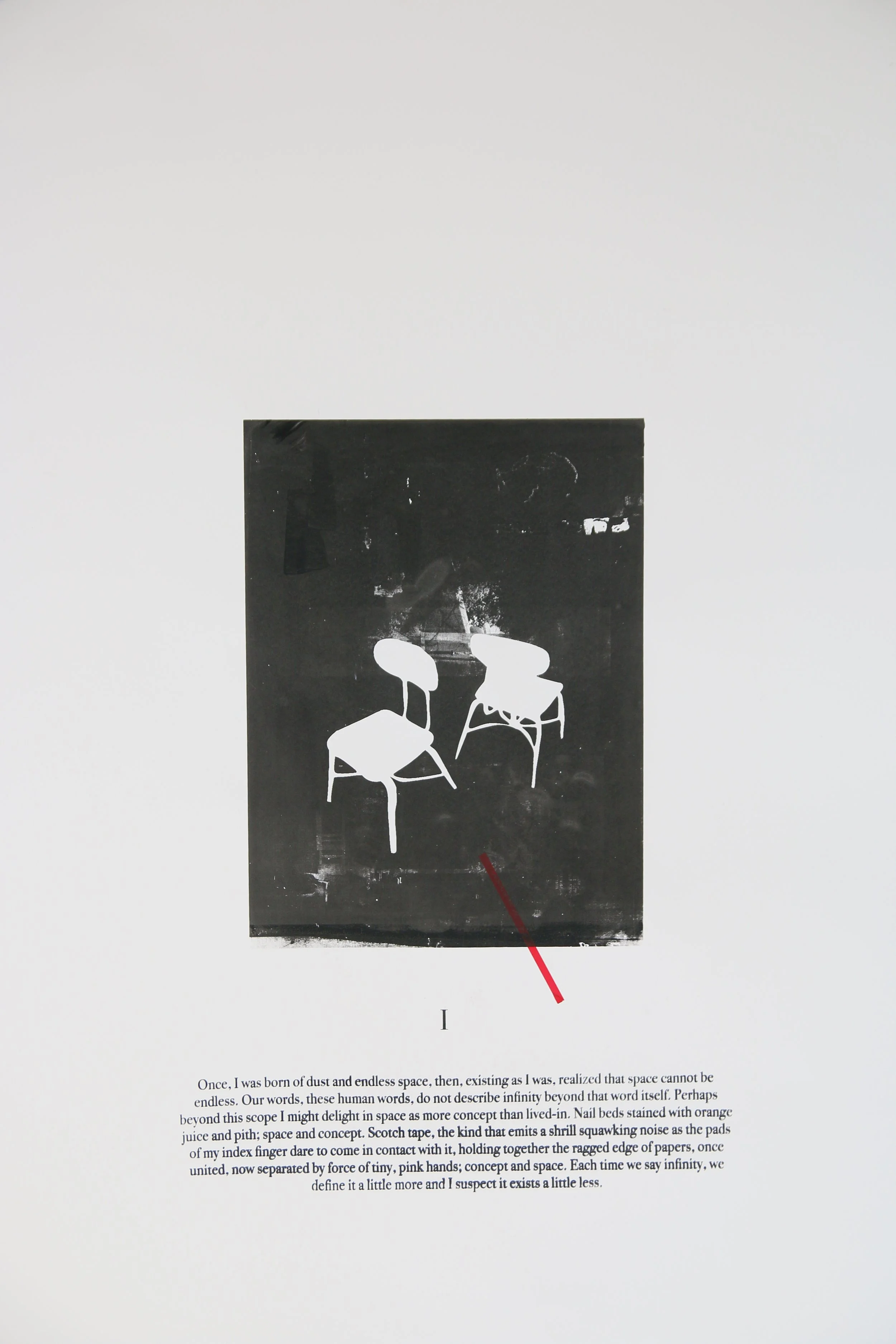
1
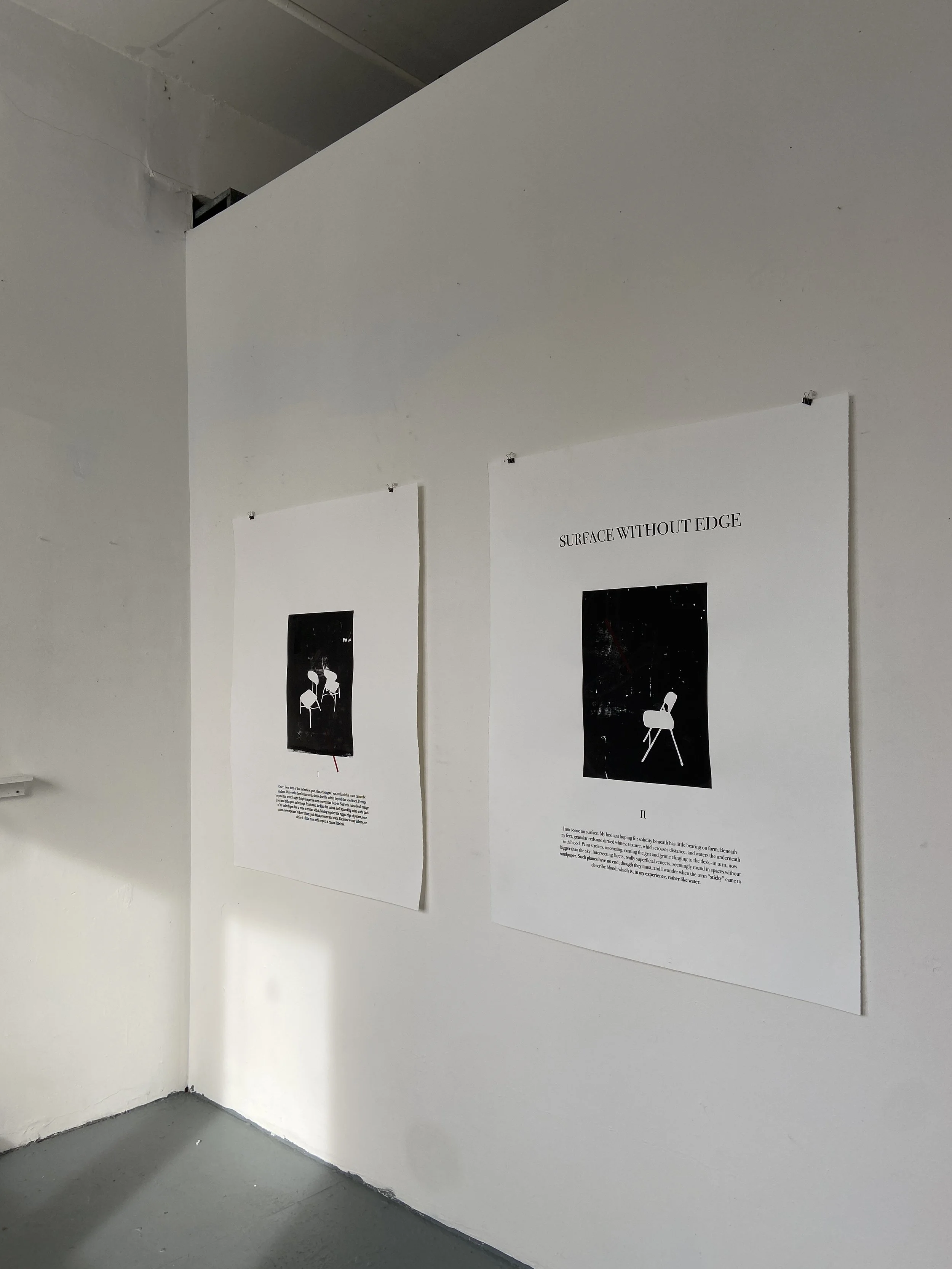
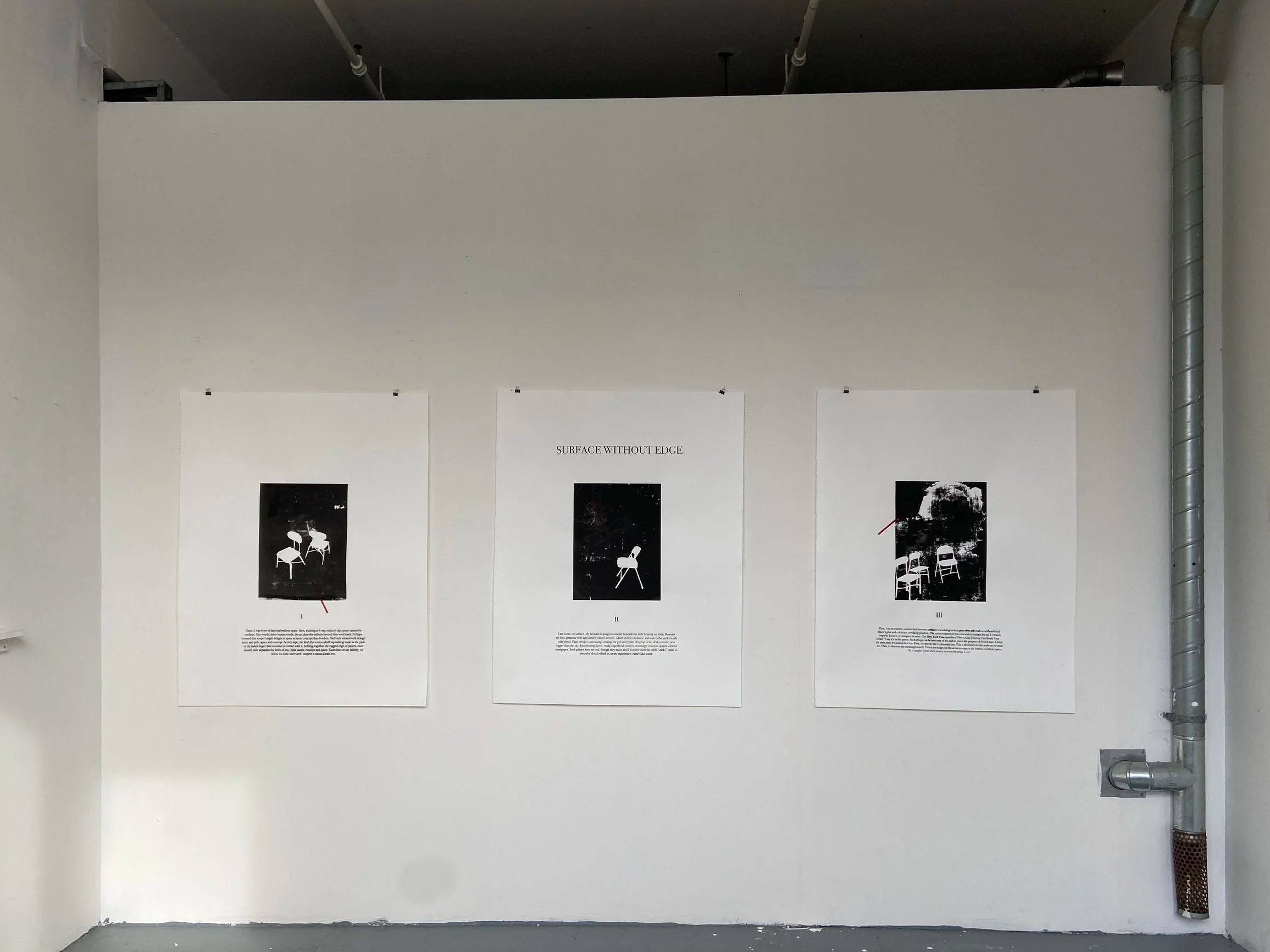
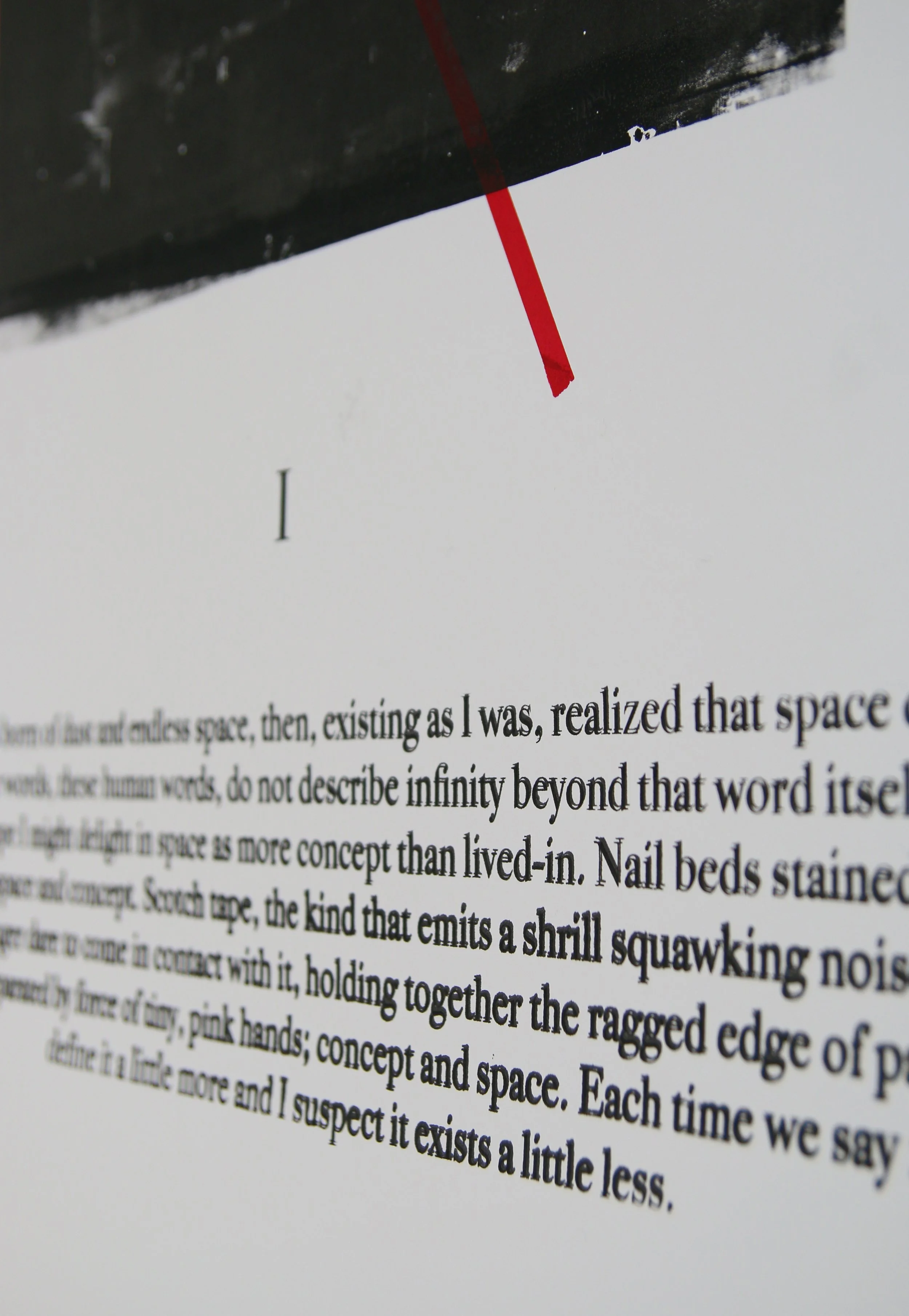
Once, I was born of dust and endless space, then, existing as I was, realized that space cannot be endless. Our words, these human words, do not describe infinity beyond that word itself. Perhaps beyond this scope I might delight in space as more concept than lived-in. Nail beds stained with orange juice and pith; space and concept. Scotch tape, the kind that emits a shrill squawking noise as the pads of my index finger dare to come in contact with it, holding together the ragged edge of papers, once united, now separated by force of tiny, pink hands; concept and space. Each time we say infinity we define it a little more and I suspect it exists a little less.
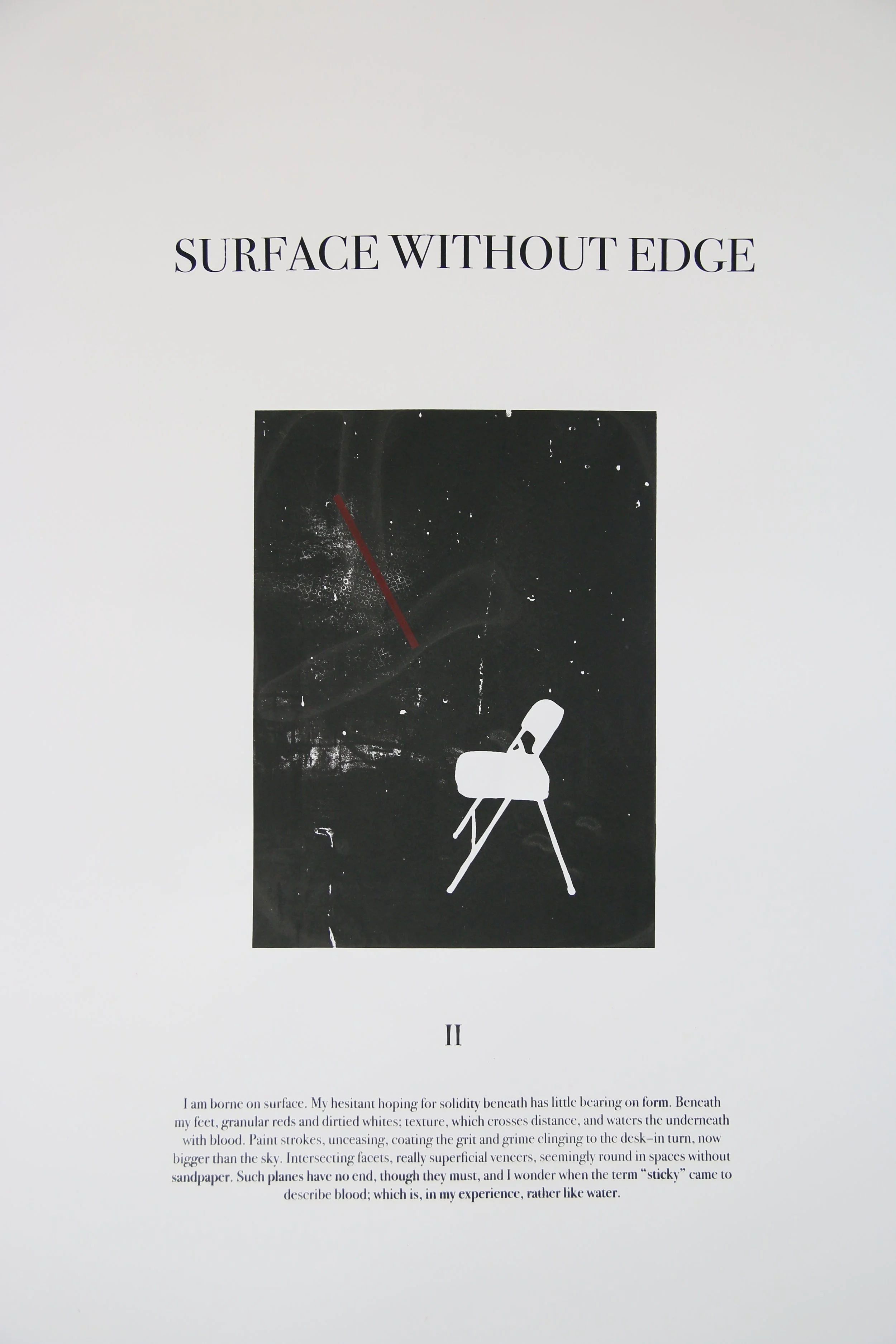
2
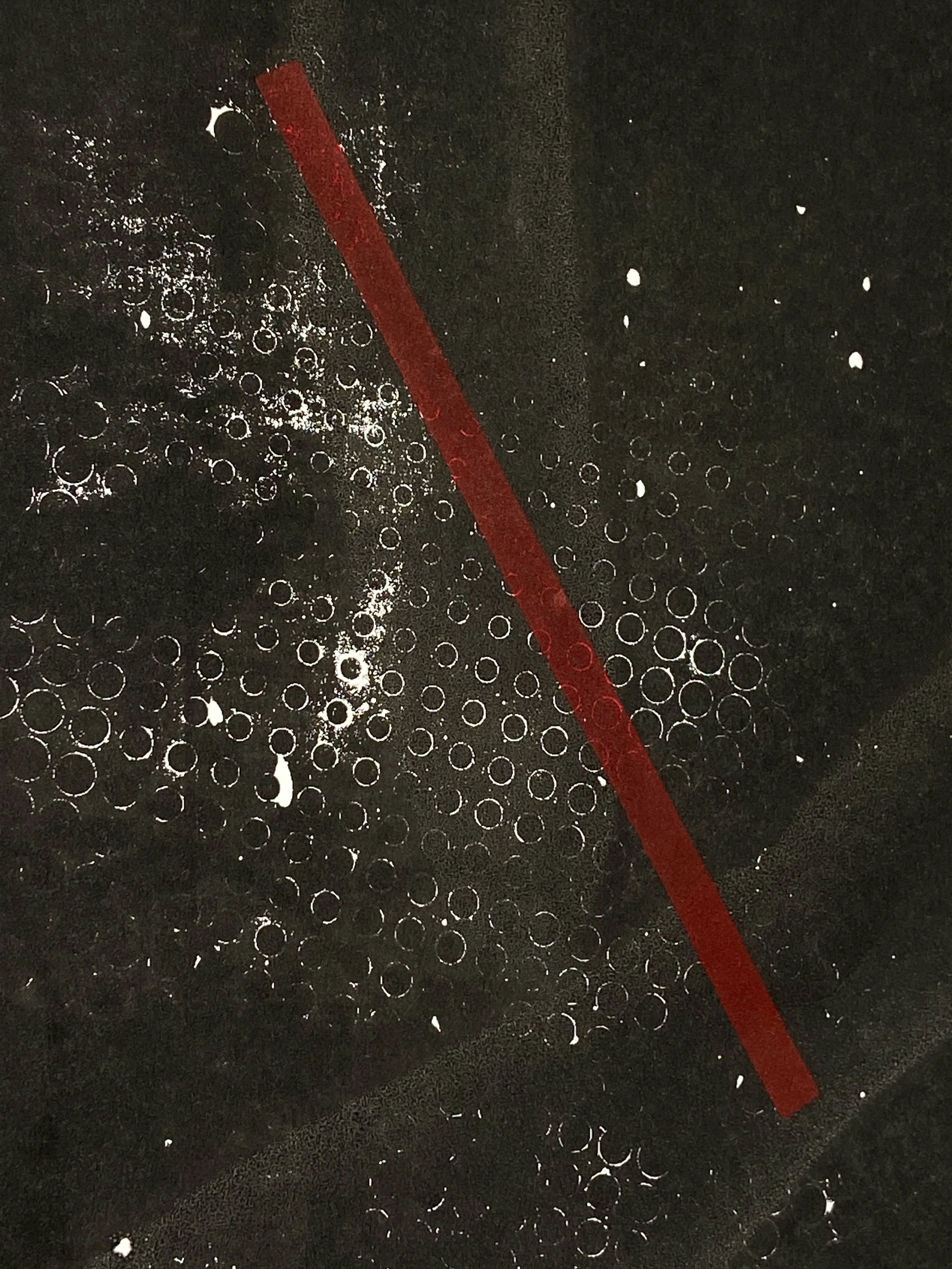
I am borne on surface. My hesitant hoping for solidity beneath has little bearing on form. Beneath my feet, granular reds and dirtied whites; texture, which crosses distance, and waters the underneath with blood. Paint strokes, unceasing, coating the grit and grime clinging to the desk–in turn, now bigger than the sky. Intersecting facets, really superficial veneers, seemingly round in spaces without sandpaper. Such planes have no end, though they must, and I wonder when the term “sticky” came to describe blood; which is, in my experience, rather like water.
3
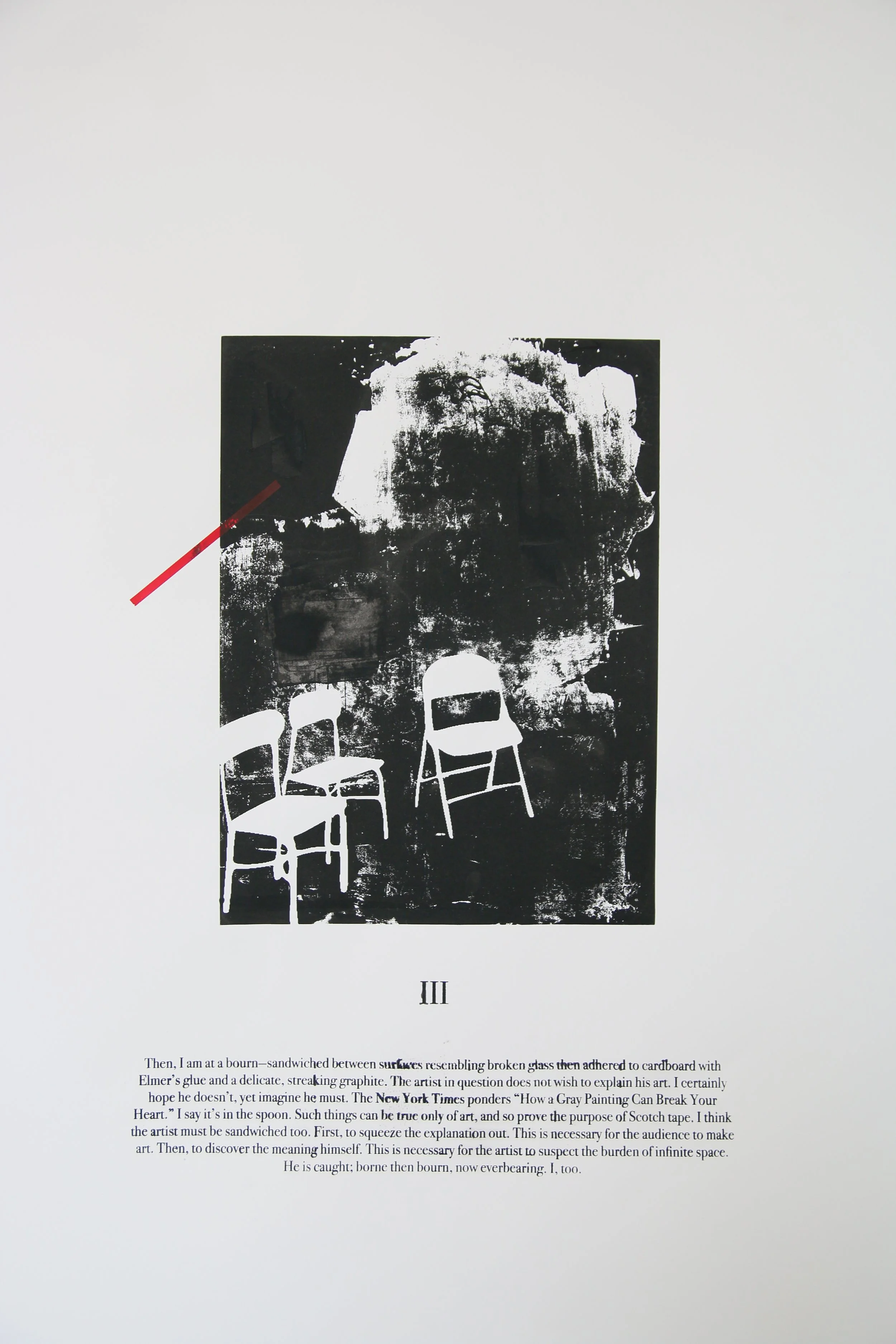
Then, I am at a bourn—sandwiched between surfaces resembling broken glass then adhered to cardboard with Elmer’s glue and a delicate, streaking graphite. The artist in question does not wish to explain his art. I certainly hope he doesn’t, yet imagine he must. The New York Times ponders “How a Gray Painting Can Break Your Heart.” I say it's in the spoon. Such things can be true only of art, and so prove the purpose of Scotch tape. I think the artist must be sandwiched too. First, to squeeze the explanation out. This is necessary for the audience to make art. Then, to discover the meaning himself. This is necessary for the artist to suspect the burden of infinite space. He is caught; borne then bourn, now everbearing. I, too.